Think about that for a second. You lock your doors at night. You wear your seatbelt. You have a smoke detector in the hallway.
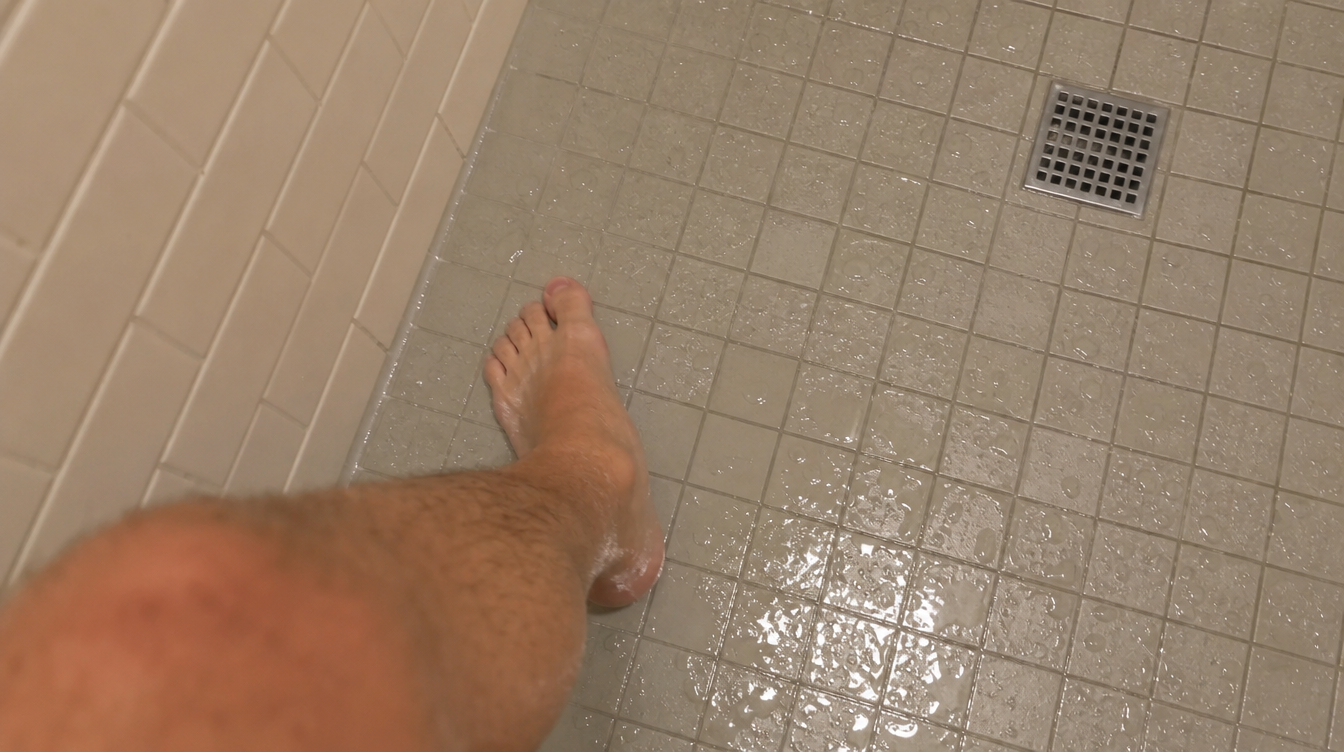
And then every single morning, you step over a slick tub wall onto a surface with zero grip — coated in water, soap film, and shampoo residue.
The CDC ran the numbers. In one year, an estimated 234,000 Americans ended up in the emergency room from bathroom injuries.
That's 640 people. Every. Single. Day. Cracked skulls on tile. Shattered wrists. Hips that snap like dry branches. Faces split open on the edge of the tub.
And here's the part nobody wants to hear: they weren't clumsy. They weren't careless. They weren't "old." They were people exactly like you.
"One Second I Was Rinsing Shampoo. The Next, My Foot Was Gone."
It happens the same way almost every time. You're on autopilot. Eyes closed. Rinsing shampoo out of your hair.
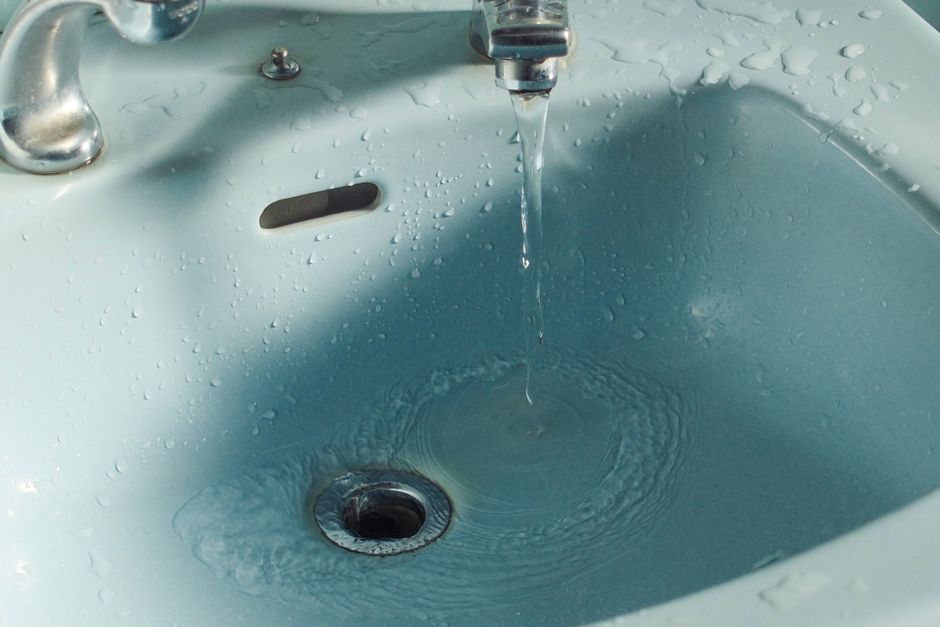
Then your foot slides toward the drain.
There's no warning. No slow motion. Just that sickening, stomach-dropping lurch — the one where your whole body knows, before your brain does, that you have nothing to grab.
Maybe you catch the curtain rod. Maybe you slam your palm against the wall and stand there shaking, heart pounding through your ribs. And then? You laugh it off. You finish your shower. You forget about it by lunch.
"Every one of those 234,000 people had near-misses too. They laughed them off too."
Until the day they didn't catch themselves. Until the day it was the back of their head hitting porcelain instead of their palm hitting the wall.
Bob Saget hit his head and thought nothing of it. He went to sleep. He never woke up.
You don't always get a warning shot.
Why "Being Careful" Cannot Save You
Let's kill this excuse right now, because it's the one that puts people on stretchers.
"I'm careful. I hold the wall. I've got it handled."
No. You don't. And here's the brutal physics of why:
1 · Your reflexes are too slow.
A slip on wet, soapy porcelain is over in a fraction of a second. Your brain needs about a quarter of a second just to notice you're falling. By the time your body reacts, you're already going down. You cannot out-think gravity.
2 · Your own shower is working against you.
Hot water dilates your blood vessels. Your blood pressure drops. That little head-rush you feel when you stand up in a hot shower? That's your balance system flickering — on the slickest surface in your house.
3 · A wet hand on a wet wall holds nothing.
Grabbing the tile as you fall is like grabbing ice with a bar of soap. It's not a plan. It's a prayer.
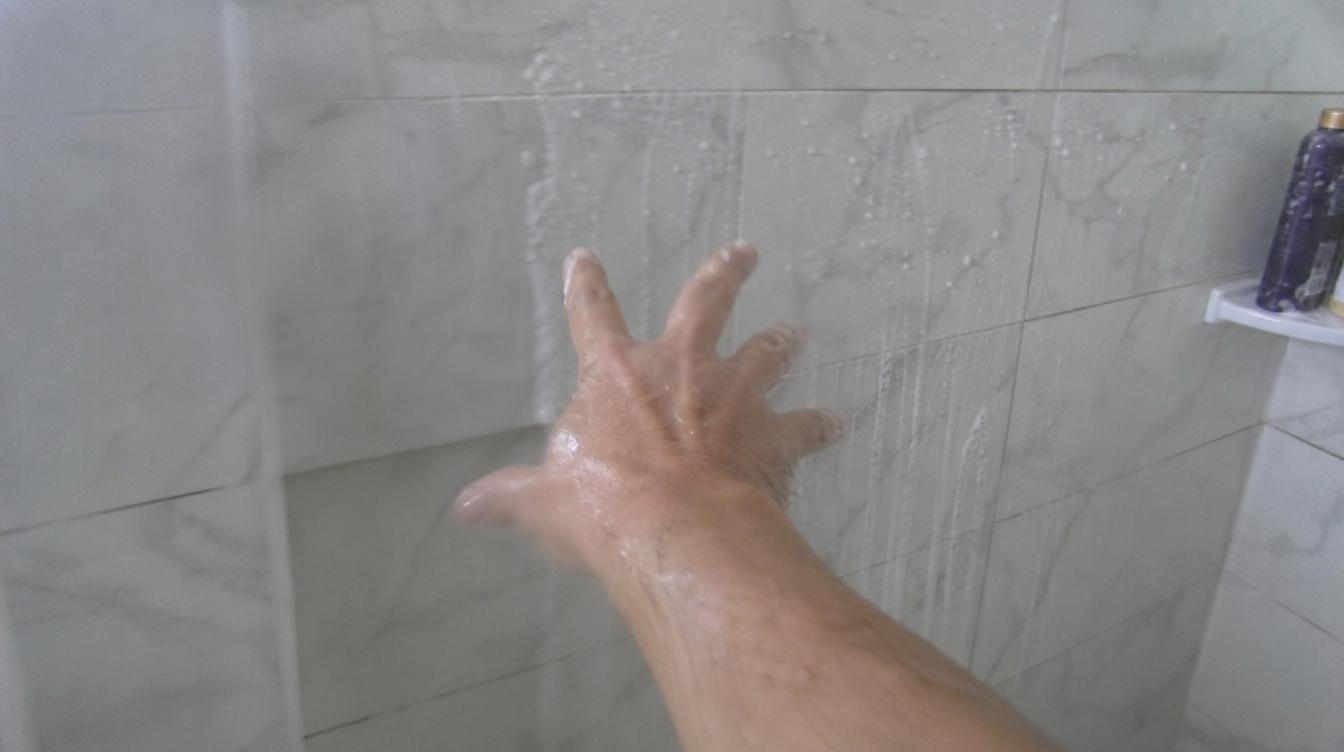
You would never run down wet marble stairs barefoot with your eyes closed. But that's exactly what you do — twice a day, every day.
Your Tub Was Never Designed To Be Safe. It Was Designed To Be Cheap.
Here's the truth the fixture industry never prints on the box.
Smooth porcelain and acrylic are used for one reason: they're easy to manufacture and easy to sell. Shiny. Seamless. Pretty in the showroom.
But the moment that surface gets wet, its slip resistance collapses. Add soap scum and body oils, and you're standing on one of the slickest man-made surfaces that exists — with nothing but bare skin between you and it.
Engineers call it the Wet-Porcelain Trap.
Fine 10,000 times. Catastrophic once.
And "once" is all it takes. A fall in the bathroom isn't a bruise. It's hard, unforgiving surfaces at every angle — tub edge, faucet, tile floor. There is nowhere soft to land.
For thousands of people every year, that one second splits life into "before the fall" and "after the fall." Hospital. Surgery. A walker. Someone else helping you bathe.
The most private room in your house becomes the scene of your most helpless moment.
640 ER visits a day. One 30-second fix.
Our safety desk reviewed the solution below. It takes less time to install than reading this sentence.
See The Safe Shower Mat →30-Day Money-Back Guarantee · Free Returns
"But I Tried A Shower Mat Once. It Was Disgusting."

We know. And you're right.
You bought one of those cheap rubber mats years ago. Then one day you peeled it up and almost gagged. Black slime caked under every suction cup. Gunk that bleach couldn't touch. You scrubbed. You soaked it. Nothing worked. Straight into the trash.
Here's why that happened — and why it wasn't your fault:
Old rubber and PVC mats create what's called the Suction Cup Petri Dish. Every single cup traps a pocket of standing water underneath. Warm. Dark. Never drying. It's a perfect breeding chamber, and once black mold grows, it embeds into the porous rubber. Permanently. No cleaner on earth gets it out.
Worse? Those bargain-bin mats have weak, sparse suction cups that pop loose mid-shower — so the "safety mat" slides around under your feet like a boogie board.
A safety product that grows mold and slides is worse than nothing. So you closed the file on shower mats forever.
Except the category didn't fail. The material did. And that problem has now been solved.
The Solution
Introducing The Safe Shower Mat: Preventive Medicine For The Most Dangerous Room In Your House
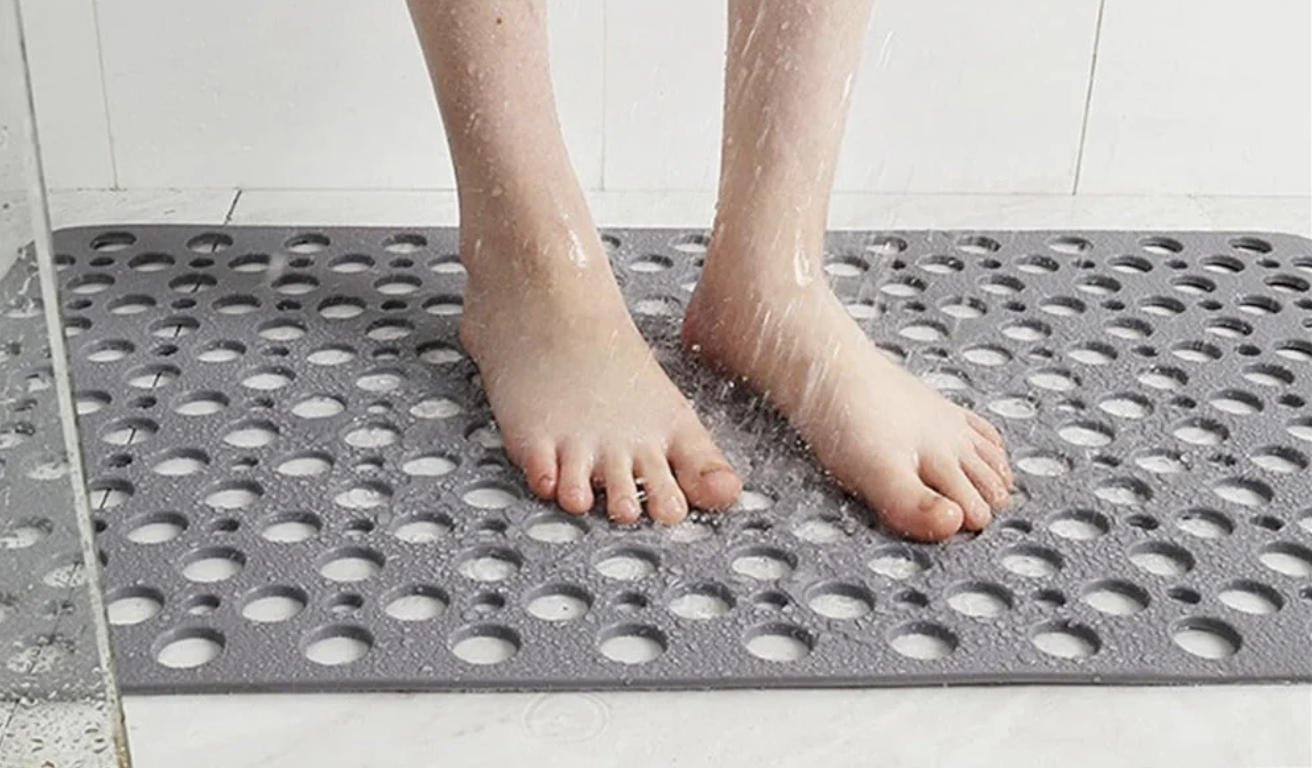
This is not a bath accessory. This is a seatbelt for the one place you're most exposed — built from medical-grade TPE, not cheap porous rubber, with a Triple-Layer Safety System:
🔒 Layer 1: Lock
A full-coverage array of suction cups bonds to your tub floor and stays locked — through the entire shower, day after day. No shifting. No sliding. No re-sticking. Your feet land on a surface that does not move. Period.
💧 Layer 2: Drain
An engineered drainage design channels water away instead of trapping it. Combined with bacteria-resistant TPE — a material mold can't embed into — the black-slime breeding ground simply doesn't exist. Rinse it in seconds. Done. No scrubbing. No gagging. No shame when guests see your tub.
☁️ Layer 3: Cushion
A soft, textured surface that grips wet skin the instant your foot touches down — while feeling gentle underfoot. No hard plastic nubs. Nothing that screams "hospital equipment." It comes in 6 clean colors and disappears into your bathroom.
Grip. Hygiene. Comfort. All three — because losing any one of them is why every mat you've ever owned ended up in the garbage.
Join 15,000 Families Who Already Made The 30-Second Change
Here's what happens when reasonable people see the number 234,000: They stop debating. They act.
Over 15,000 families have already put the Safe Shower Mat in their tubs. Parents protecting kids who treat bath time like a splash zone. Adults quietly shipping one to their parents' house after a scary phone call. People who had their near-miss — and decided the second warning wasn't coming.
The pattern in the reviews is almost word-for-word:
"My foot slid last month and I grabbed the curtain rod. Ordered this the same night. Should have done it years ago."
★★★★★ — Verified Buyer
"Flipped it over after 3 weeks expecting the usual black gunk. Nothing. Clean. I'm honestly shocked."
★★★★★ — Verified Buyer
"Bought one for us and two for my parents. Cheapest peace of mind I've ever purchased."
★★★★★ — Verified Buyer
That last one matters. Because if you won't do this for yourself — do it for the people who'd have to find you.
Let's Talk About Money. It Won't Take Long.
The Safe Shower Mat is $54.99 right now (regularly $110).
Now compare:
- —Average ER visit: hundreds to thousands of dollars — and that's with insurance
- —A serious fall: surgery, rehab, months of someone else driving you around
- —The Safe Shower Mat: less than one hour of an ER copay
Fifty bucks versus a stretcher. That's not a decision. That's arithmetic.
"But Amazon has $12 mats." Yes. You already bought one. It molded, it slid, and you threw it away. The $12 mat is how you pay twice — once in cash, once on the tile.
Safe Shower Mat — $54.99 $110
30-day trial · Free returns · 6 colors · Fewer than 1% ever returned
Claim 50% Clearance Price →Zero Risk. Literally.
Try the Safe Shower Mat for 30 full days. Stand on it. Shower on it. Peel it up and inspect underneath — go ahead, look for the gunk that isn't there.
If you're not completely convinced it belongs in your tub, send it back for a full refund. Free returns. No questions, no hassle. Fewer than 1% of customers ever do.
"The only risk in this entire equation is the one sitting in your bathroom right now: bare, wet, polished porcelain — waiting."