NASA Solved the Supplement Problem 50 Years Ago. The Industry Never Told You.
Dr. James L. Green spent 42 years as NASA's Chief Scientist. He watched the agency crack a nutritional problem that most Americans over 50 are still struggling with today — and he knows exactly why the solution never made it to your medicine cabinet.
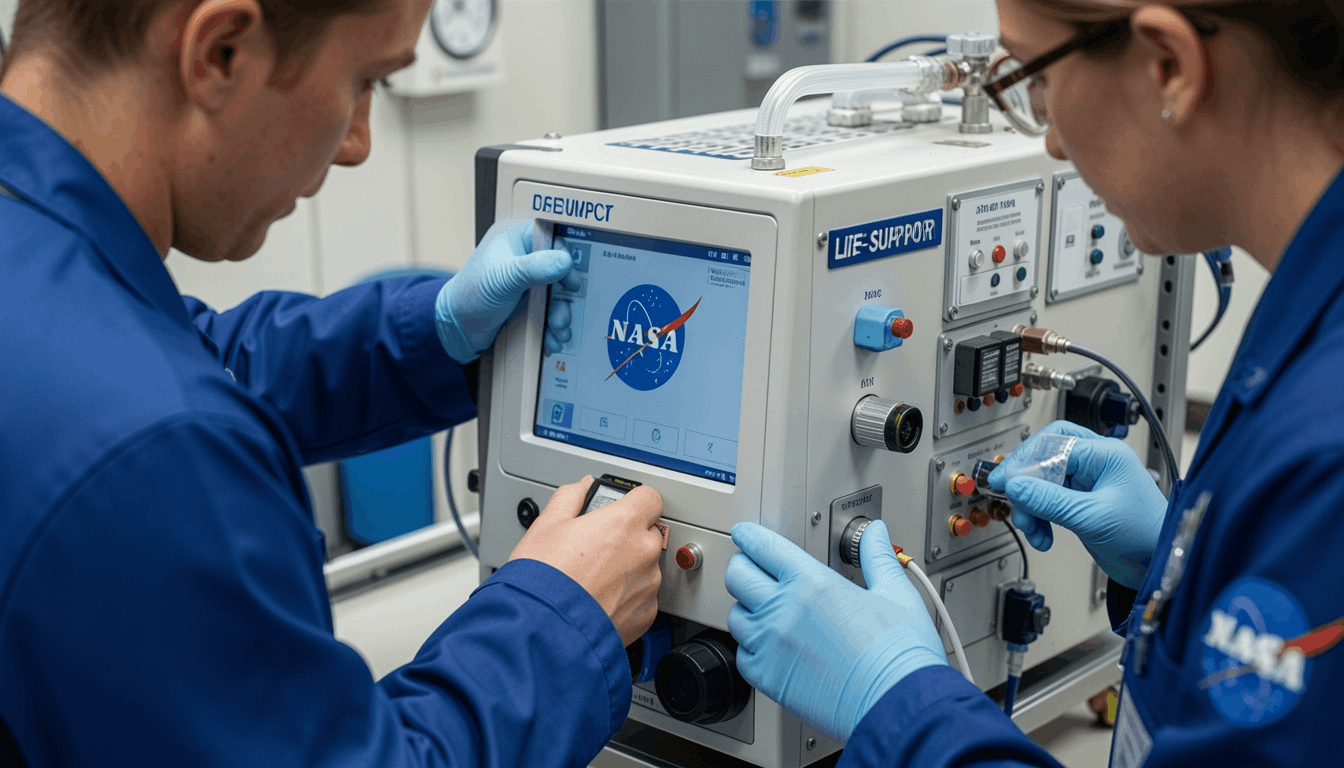

Something happened in 1969 that changed nutritional science forever.
It didn't happen in a laboratory.
It happened in a room full of engineers in Houston, Texas, who were trying to solve a problem that had never existed before in human history.
How do you keep a human being alive — fully functioning, cognitively sharp, physically capable — in an environment where carrying a cabinet full of supplement bottles is impossible?
Where there is no margin for absorption failure.
Where if calcium blocks iron at the wrong moment, or if B12 doesn't reach the cells that need it, or if CoQ10 is underdosed by even a fraction — a $25 billion mission fails and people die.
NASA had to solve this. Completely. No compromises.
They did.
And for fifty years, the $50 billion supplement industry has been hoping you'd never find out.

The Problem No Supplement Company Had Ever Had to Solve
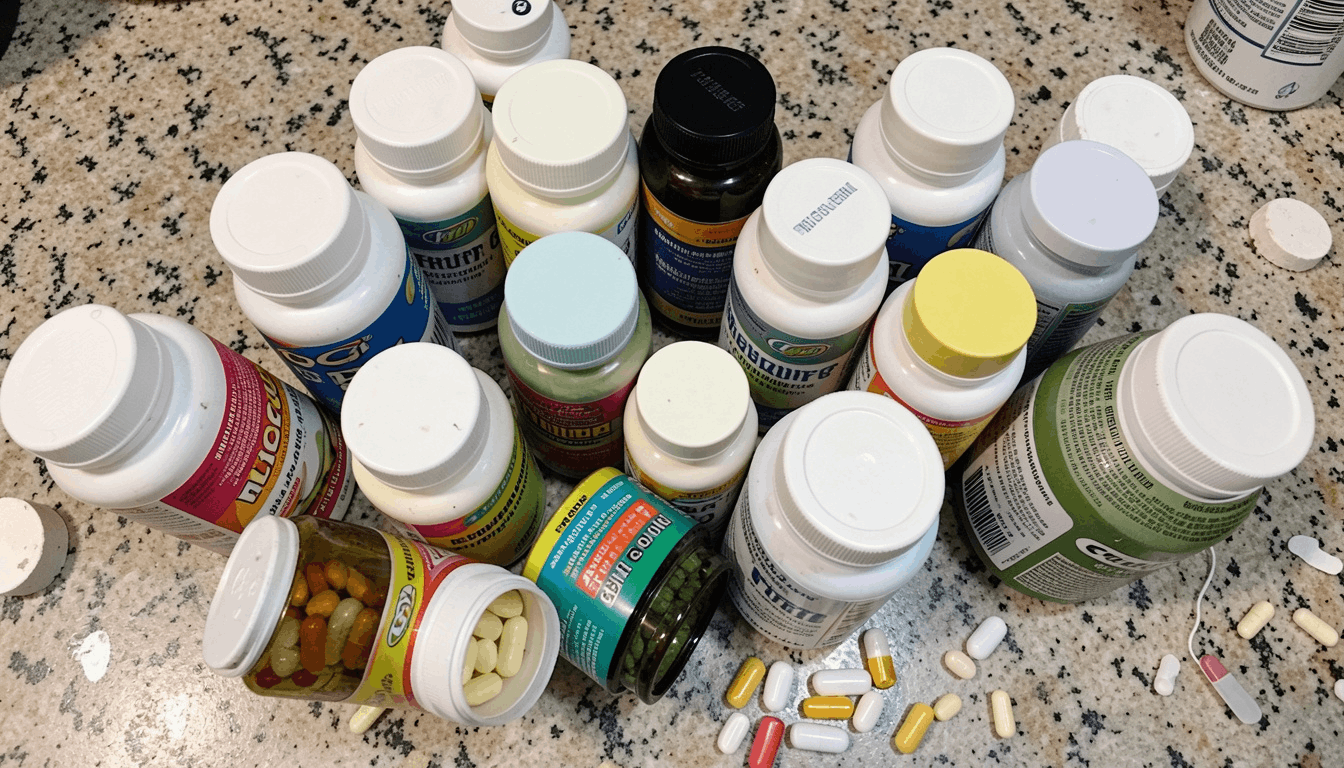
Walk into any pharmacy today and you will see the same model repeated on every shelf.
Individual bottles. Individual ingredients. Individual doses that have nothing to do with each other. A multivitamin over here. CoQ10 over there. A B-complex. Magnesium. Zinc. Vitamin D. Fish oil. A probiotic.
Twelve products. Twelve separate transactions. Twelve separate chances for something to go wrong.
NASA could not operate that way.
An astronaut on a six-month mission cannot miss a dose because they forgot which bottle was which. They cannot absorb less iron because they happened to take their calcium supplement at the same time. They cannot run a zinc deficiency because nobody told them zinc blocks copper absorption. They cannot drag through the afternoon because their CoQ10 was dosed at 30mg when the research calls for 100mg.
Every one of those failures — which are happening inside the bodies of millions of Americans over 50 right now, every single morning — would be a mission-ending event in space.
So NASA's scientists did something the supplement industry had never done.
They stopped thinking about individual nutrients.
They started thinking about a system.
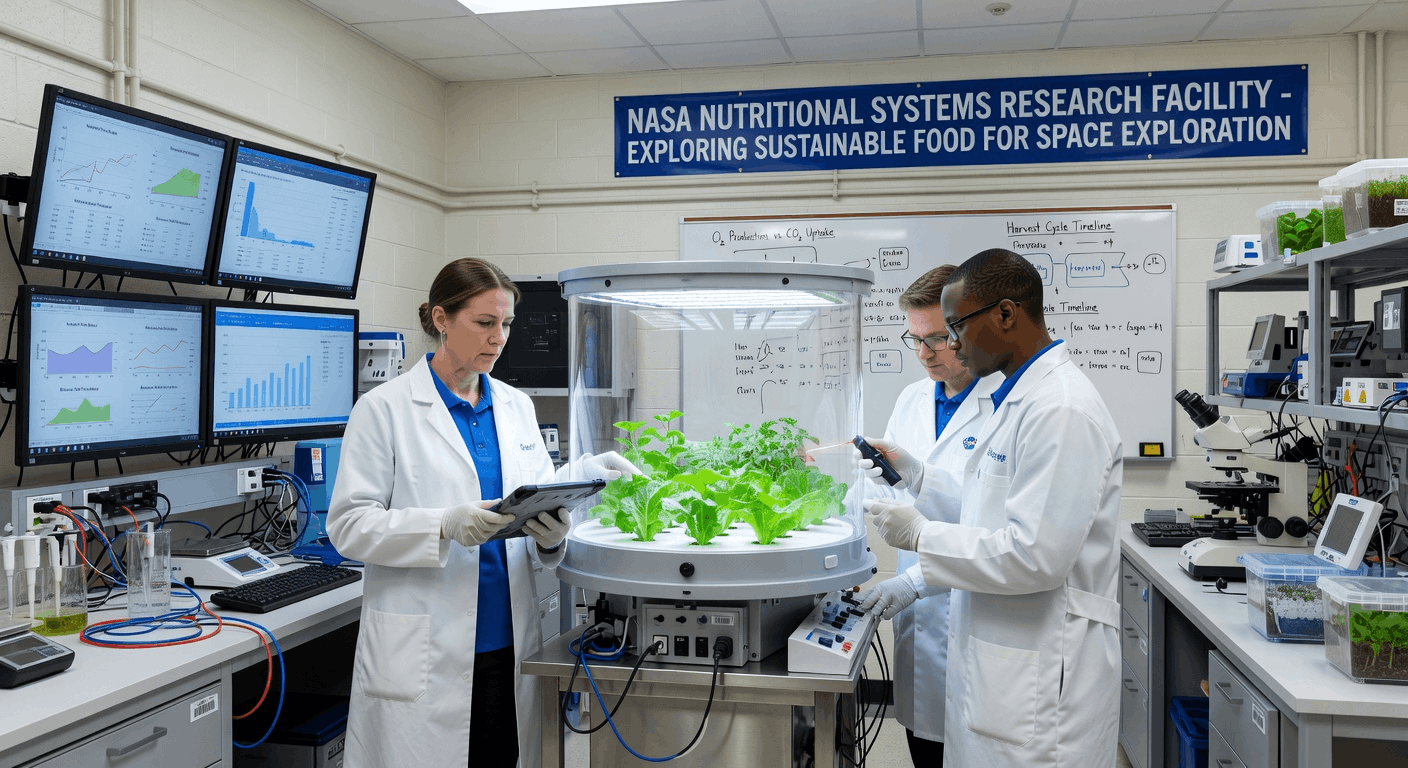
What They Discovered — and What It Means for Your Cabinet
The findings that came out of NASA's nutritional research program over the following decades can be summarized in three principles that the supplement industry has spent fifty years ignoring.
Principle one: clinical doses or nothing. A nutrient delivered at a sub-therapeutic dose does not produce a sub-therapeutic result. It produces no result. The body does not respond to nutritional signals that fall below the threshold required to trigger a cellular response. NASA's research confirmed what clinical pharmacologists had suspected for years: the difference between 30mg of CoQ10 and 100mg of CoQ10 is not a 70% difference in outcome. It is the difference between a measurable effect and no effect at all. Most supplement companies have always known this. They dose at the lower number because it costs less.
Principle two: form determines absorption. The chemical form of a nutrient is not a marketing distinction. It is a biological one. Cyanocobalamin B12 — the cheap synthetic form in most multivitamins — requires a conversion step that up to 60% of adults cannot complete efficiently due to MTHFR genetic variants. Magnesium oxide absorbs at approximately 4% bioavailability. These are not edge cases. They are the majority. NASA could not afford to dose astronauts with nutrients their bodies couldn't use. The supplement industry has been doing exactly that for decades — because the cheaper form costs less to manufacture.
Principle three: nutrients must be formulated to work together, not compete.
This is the one that should make you angry.
Take calcium and iron together — which most "over 50" multivitamins deliberately combine — and calcium blunts iron absorption by up to 50%.4 Add a morning coffee and the number gets worse.
Take 50mg of zinc for immune support — standard dosing in most stacks — and you can block copper absorption by up to 50% within the same dose. Within four to six weeks, the zinc habit quietly creates a copper deficiency.5
Vitamin C at high doses interferes with B12. Magnesium oxide competes for the same intestinal transporters as calcium. Cyanocobalamin B12 is nearly useless for the millions of adults with MTHFR variants.
Your $300-a-month supplement routine is not supplementing you. It is, in part, unsupplementing you. And the companies selling you those twelve bottles have known about these interactions for decades.
NASA solved this in the 1970s. Their solution was elegant: stop selling nutrients individually. Build one integrated system where every ingredient is formulated at clinical doses, in bioavailable forms, in ratios specifically calculated to enhance — not compete with — the absorption of every other ingredient in the formula.
One system. No conflicts. No missed doses. No margin for failure.
The supplement industry looked at that solution, calculated what it would do to their revenue model, and put it back on the shelf.
What the Federal Government Said — and the Industry Quietly Ignored
NASA's research was not the only warning the supplement industry chose to overlook.
In 2022, the U.S. Preventive Services Task Force — the federal panel that sets the national standard for mammograms and colonoscopies — published a formal recommendation in the Journal of the American Medical Association.
"The USPSTF recommends against the use of beta carotene or vitamin E supplements for the prevention of cardiovascular disease or cancer." — U.S. Preventive Services Task Force, JAMA 2022
For multivitamins: the evidence was deemed "insufficient." The panel could not find proof they reduce heart disease, cancer, or all-cause mortality.1
In 2024, JAMA Network Open published a study tracking 390,124 adults for over 20 years. Daily multivitamin use was not associated with lower mortality. None.2
The Annals of Internal Medicine stated plainly:
"Most supplements do not prevent chronic disease or death, their use is not justified, and they should be avoided." — Annals of Internal Medicine3
Three separate federal-grade panels. The same conclusion.
None of this appeared on the label of any supplement you bought last month.
The Man Who Spent 42 Years at NASA — and What He Did Next
Dr. James L. Green joined NASA in 1980.
He stayed for 42 years.
He rose to become NASA's Chief Scientist — the agency's highest-ranking scientific position. He oversaw the research programs that explored what it means to keep the human body functioning at its peak in the most hostile environment ever encountered by our species.
He watched NASA solve the nutritional fragmentation problem that most supplement companies have spent fifty years pretending doesn't exist.
He retired from NASA in 2022.
And then the team behind IM8 Health — a supplement brand co-founded by David Beckham and backed by Prenetics, a NASDAQ-listed biotechnology company — approached him about applying what he knew to a formula designed for the 700 million people on Earth who are not astronauts, but who deserve the same standard of nutritional science.
He did what any scientist would do.
He read the research. He reviewed the clinical trial protocol. He examined the ingredient panel line by line — every dose, every form, every formulation decision.
Then he checked who else had signed on:
- Dr. Dawn Mussallem — Mayo Clinic Oncologist, CMO Fountain Life. Stage IV cancer survivor. Heart transplant recipient. The first person on record to run a full marathon within one year of a heart transplant.
- Dr. David Katz — Founding Director, Yale-Griffin Prevention Research Center
- Prof. Suzanne Devkota — Director, Human Microbiome Research Institute, Cedars-Sinai
- Prof. Stephen Anton — Division of Aging and Geriatric Research, University of Florida
Then he looked at the one thing that separates a supplement company making promises from one that has proven them.
IM8 had run a 12-week randomized, controlled clinical trial on their actual finished formula — the exact product as it ships, at the exact doses it contains — conducted by the San Francisco Research Institute and published on the National Library of Medicine.
He signed.
He is now a Founding Scientific Advisor to IM8 Health.

What NASA's Approach Looks Like In a Scoop
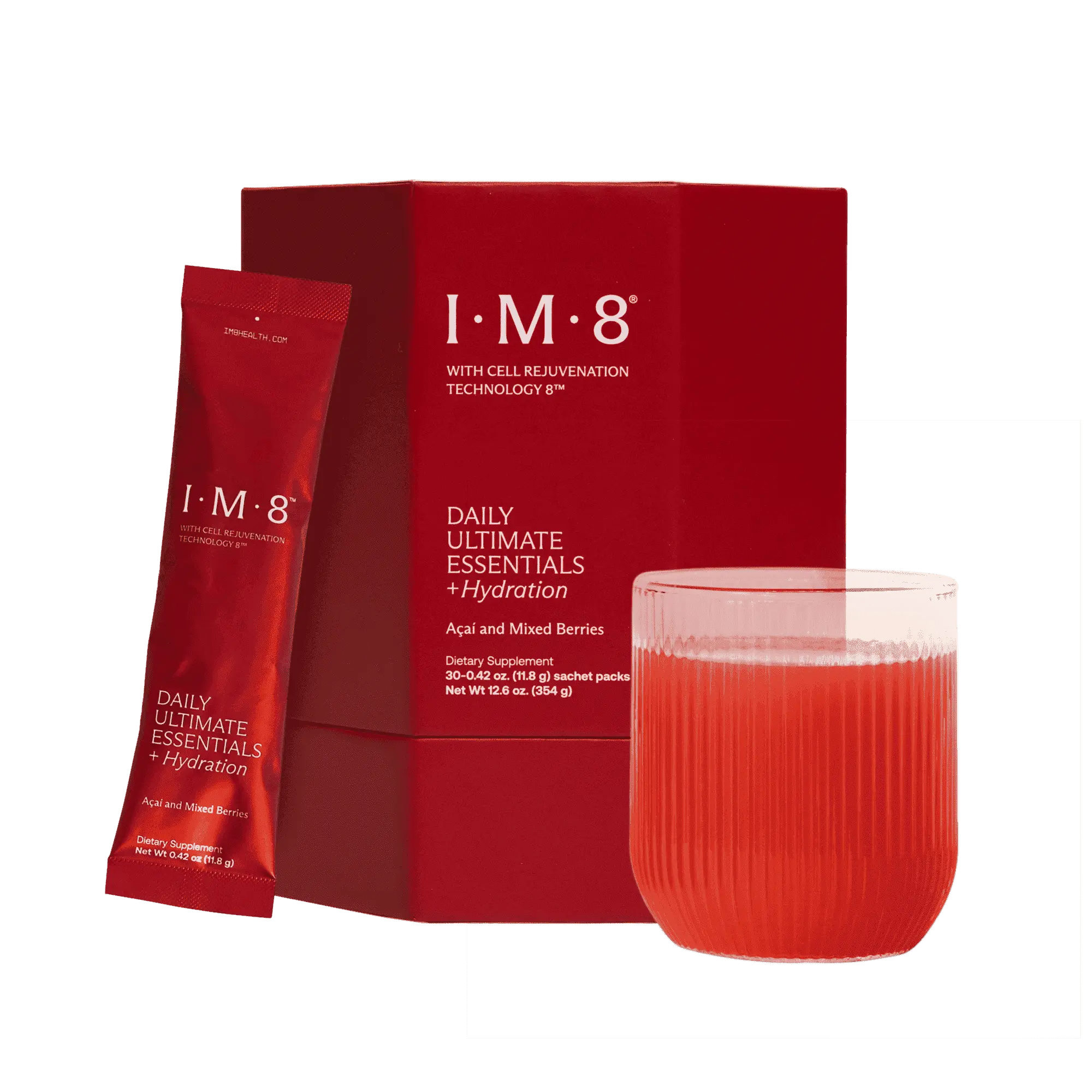
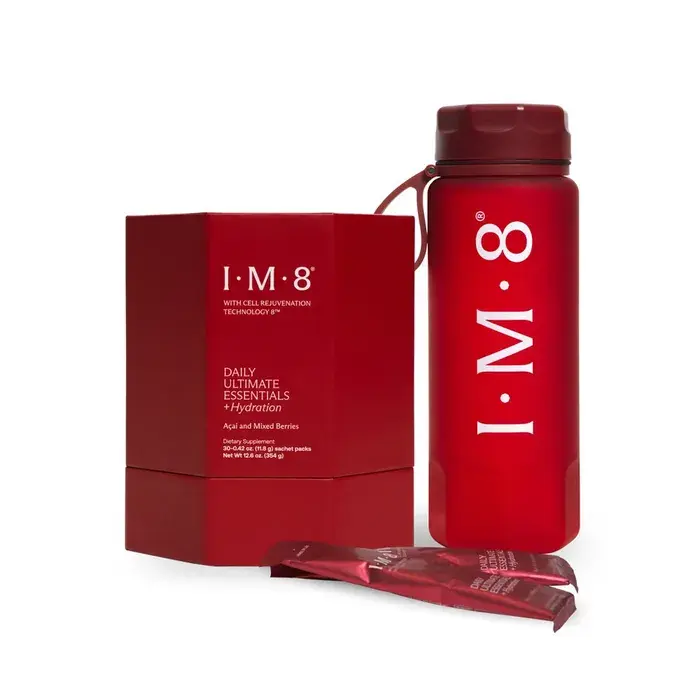
The product Dr. Green signed his name to is called IM8 Daily Ultimate Essentials.
One scoop. One drink. Once a day.
The reason a single 12-gram scoop can do what twelve bottles cannot comes down to the same physics NASA's engineers worked out decades ago. A powder formulation has 1,100% more active ingredient capacity than a standard capsule. At that volume, you can deliver every nutrient at the dose that the research actually uses — not the dose that fits on a marketing label.
- 90 precision-optimized ingredients in a single daily drink
- CoQ10 at 100mg — the clinical threshold. Not the 30mg fairy-dust amount in most multivitamins.
- MSM at 1,500mg for joint support — a clinical dose that is physically impossible to deliver in a standard capsule
- Vitamin C at 900mg — 1,000% of daily value. Not the 60mg in most stacks.
- Vitamin D3 at 50mcg in the lichen-derived plant form (VegD3®) — not irradiated lanolin
- B12 as methylcobalamin at 200mcg — the bioactive form that bypasses the MTHFR conversion failure entirely
- Magnesium as bisglycinate chelate — the form that absorbs at the blood-brain barrier. Not magnesium oxide with its 4% absorption rate.
- Complete integrated gut system: 3g prebiotic fibre + 10 billion CFU probiotics using DE111® and BC99® strains (specifically shown to survive stomach acid) + FloraSMART® postbiotics — all three layers, formulated to work together
- Folate as Quatrefolic® — the active 5-MTHF form. Not synthetic folic acid.
- NSF Certified for Sport — tested against 280+ banned substances, heavy metals, and contaminants. The same certification trusted by the NFL, MLB, NHL, NASA, and WADA.
No nutrient competes with another for absorption. No dose falls below the clinical threshold. No form requires a conversion step that a percentage of the population cannot complete.
This is what it looks like when you apply NASA's systems thinking to human nutrition. Not twelve products at marketing doses. One integrated system at clinical doses.
The Clinical Trial the Supplement Industry Cannot Match
Most supplement companies cite "clinically studied ingredients." Every company can say this. It means that somewhere in the scientific literature, someone studied each ingredient individually.
It says nothing about whether their formula — at their doses, in their combination — produces results in real people.
IM8 submitted their actual finished formula to a 12-week randomized, controlled trial — the product as it ships — and published the results on the National Library of Medicine. No other all-in-one supplement in this category has done this.
The outcomes:
- 95% of participants felt a noticeable boost in daily energy
- 85% felt less bloated with improved digestion
- 80% reported better sleep quality
- 75% noticed sharper focus and mental clarity
These numbers came from people taking the product you would actually buy. Not from isolated ingredient studies. From a real trial on a real formula.
And then there is the credential that surprised even Dr. Green.
IM8 Daily Ultimate Essentials is now stocked on store.mayoclinic.com — the retail outlet of the #1-ranked hospital in the United States per U.S. News & World Report. Three distinct SKUs. All HSA/FSA eligible.7
The Mayo Clinic Store is not a medical endorsement. But Mayo Clinic is famously conservative about which brands they will put their name next to. The list of all-in-one supplements that have reached that shelf is extremely short.
$2.61/serving · Free shipping · HSA/FSA eligible at checkout
The Math Most People Don't Run
Here is what the fragmented approach actually costs versus the integrated system:
| Item | Fragmented Stack | IM8 Daily Ultimate Essentials |
|---|---|---|
| Multivitamin | $20 | included |
| Vitamin D3 + K2 | $33 | included |
| B-complex (methylated forms) | $25 | included |
| CoQ10 (100mg, ubiquinol) | $30 | included |
| Magnesium glycinate | $18 | included |
| Omega-3 fish oil | $40 | included |
| Probiotic (quality strain) | $35 | included |
| Greens powder | $35 | included |
| Joint support (MSM 1,500mg) | $25 | included |
| Adaptogen complex | $15 | included |
| Postbiotic / digestive enzymes | $35 | included |
| Monthly total | ~$311–$347 | $89 |
Switch the fragmented stack for the integrated system and you save approximately $222 a month. Over a year: $2,664.
You also stop the calcium-iron, zinc-copper, and Vitamin-C-B12 absorption wars happening in your gut every morning. Wars that have been draining the value of every dollar you've spent on supplements for years.
And IM8 is HSA/FSA eligible with a 98% approval rate — meaning the actual out-of-pocket cost can drop to approximately $62 a month.
What People Actually Report After 90 Days
Across 700,000+ customer purchases and 16,255 verified Trustpilot reviews (4.8 stars), the pattern that appears most consistently:
- Weeks 2–3: The afternoon energy wall softens — usually the first thing people notice
- Weeks 4–6: Morning clarity improves. The fog that became normal starts to lift.
- Weeks 6–10: Joint stiffness begins to shift as MSM accumulates to therapeutic levels
- Weeks 10–12: Sleep quality tends to be the last thing to change — but it changes
"I turned 60 last year. Joint aches, sluggish, real brain fog. I couldn't keep a consistent supplement routine — too many to swallow. IM8 has changed all that. I have energy, no aches and pains, and feel clear-headed." — Jane · Verified Trustpilot, 5 stars · Age 60
"My annual blood work — all my vitamin levels were beyond amazing. My doctor said 'whatever you're doing, keep it up.' IM8 was the only thing I'd changed." — Beverly Rob · Verified Trustpilot, 5 stars
"I was spending more than $200 per month on separate supplements and still not feeling right. IM8 replaced everything. My monthly cost went down and within 60 days I felt more like myself than I had in years." — Verified Trustpilot, 5 stars
How To Try It — The 90-Day Protocol
The 12-week clinical trial that produced the results above ran for the same duration as the quarterly plan. That is not a coincidence. Ninety days is how long it takes for an integrated nutritional system — at clinical doses — to move all four of the primary markers: energy, digestion, joints, and sleep.
- One-time, 30-day jar: $112 ($3.73/serving). Good for a first look.
- Monthly subscription: $89 every 4 weeks ($2.97/serving). Save 20%. 30-day money-back guarantee.
- Quarterly subscription: $235 every 12 weeks ($2.61/serving). Save 30%. 90-Day Money Back, No Questions Asked.
The quarterly plan is the one most readers choose — because the 90-day guarantee gives you the same runway as the clinical trial to feel the difference before you commit. If after 90 days you don't feel the change that 95% of trial participants describe, you ship the remaining product back and get a full refund. No questions. No phone-tree.
Free shipping to the US, Canada, UK, and EU. HSA/FSA eligible at checkout (98% approval rate).
Try IM8 Daily Ultimate Essentials — 90-Day Money Back →$2.61/serving · Free shipping · HSA/FSA eligible at checkout

A Final Note from Dr. Green
In his own words, after 42 years studying what it takes to keep human beings performing at the edge of what their biology allows:
"The science of integrated nutrition has been understood for decades. What IM8 has built is the first consumer product I have seen that applies that science honestly — at clinical doses, in bioavailable forms, in a formula designed so that every ingredient enhances the absorption of every other. This is not a greens powder with good marketing. It is a nutritional system built on the same principles we developed to keep human beings alive in space." — Dr. James L. Green · Former Chief Scientist, NASA (42 years) · Founding Scientific Advisor, IM8 Health
For most readers over 50, the question is no longer whether to supplement.
It is whether to keep paying $300 a month for the fragmented approach that NASA's engineers made obsolete fifty years ago — or to replace it with the integrated system they would have recognized immediately.
The 90-day guarantee means you risk nothing to find out.
- 90 ingredients in one scoop
- NSF Certified for Sport
- Stocked on the Mayo Clinic Store
- 12-week RCT on finished formula
- NASA / Mayo / Yale / Cedars-Sinai scientific board
90-day money-back, no questions asked. HSA/FSA eligible.
Sources
1 U.S. Preventive Services Task Force. "Vitamin, Mineral, and Multivitamin Supplementation." JAMA, 2022;327(23):2326–2333.
2 Loftfield E et al. "Multivitamin Use and Mortality Risk." JAMA Network Open, 2024.
3 Guallar E et al. "Enough Is Enough: Stop Wasting Money on Vitamin and Mineral Supplements." Annals of Internal Medicine, 2013;159(12):850–851.
4 Calcium-iron absorption interference — Journal of Nutrition, 2022; PubMed PMID 21462112.
5 Zinc-copper absorption competition — PubMed PMID 18820153.
7 Mayo Clinic Store IM8 listing — store.mayoclinic.com/im8 — verified live, 3 SKUs, HSA/FSA eligible.
8 San Francisco Research Institute — 12-week Randomized, Controlled, Clinical Trial on IM8 Daily Ultimate Essentials. im8health.com/pages/science.
Disclaimer
This article contains advertising content produced in partnership with IM8 Health. Dr. James L. Green is a Founding Scientific Advisor to IM8 Health with a financial relationship with the brand. Individual results vary. Statements have not been evaluated by the Food and Drug Administration. IM8 Daily Ultimate Essentials Pro is not intended to diagnose, treat, cure, or prevent any disease. USPSTF, JAMA, and Annals citations refer to findings on conventional multivitamin supplementation and do not constitute an endorsement of any supplement brand. Consult your physician before beginning any new supplement regimen.

